

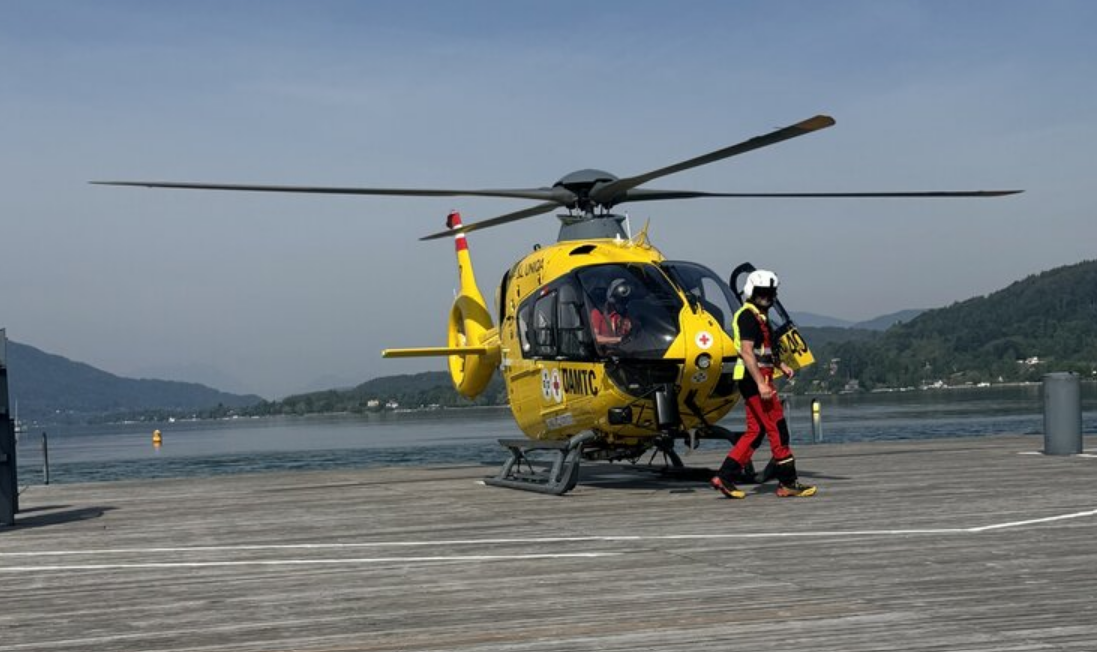
A new cooperation agreement is intended to further improve procedures during emergency and disaster response operations.
The ÖAMTC Air Rescue Service and the Austrian Water Rescue Service (ÖWR) recently signed a cooperation agreement. The goal of this agreement is to deepen and sustainably strengthen cooperation between the two organizations, both in day-to-day operations and in the event of a disaster.
Marco Trefanitz, Managing Director of ÖAMTC Air Rescue:
“Due to changing climatic conditions and the resulting weather patterns, our operations are becoming increasingly complex—especially during natural disasters such as floods or severe storms, when swift and coordinated action is crucial. Through this partnership, we are laying the groundwork to help people in need even more efficiently and in a more coordinated manner in the event of an emergency.”
The agreement focuses, among other things, on equipment, training, emergency response, and the joint conduct of exercises. For example, specialized water rescue teams —particularly dive teams and river and whitewater rescuers—are to be integrated even more closely into the ÖAMTC Air Rescue’s operational plans. Furthermore, flood assistance is to be firmly incorporated into the training programs of both organizations.
Alexander Pamer, First Vice President of the ÖWR National Executive Committee
“Our collaboration with ÖAMTC Air Rescue has proven its worth many times in the past—and with this agreement, we are now taking it to a new level. Every minute counts, especially in the event of a disaster—coordinated procedures, clear lines of communication, and mutual understanding are essential for this.”
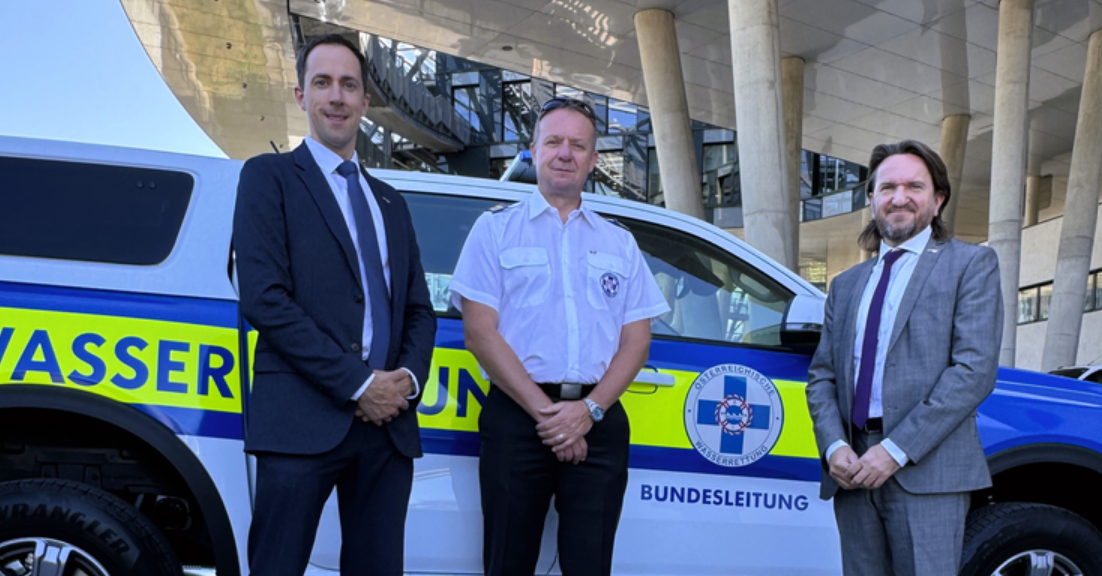
Partnership between ÖAMTC Air Rescue and Austrian Water Rescue
From left to right: Klaus Schwarzenberger (COO of ÖAMTC Air Rescue), Alexander Pamer (1st Vice President of the ÖWR National Executive Board), Marco Trefanitz (CEO of ÖAMTC Air Rescue)
The two organizations have also set a goal of continuously developing technical and tactical interfaces to ensure seamless cooperation in an emergency. Regular drills are intended to strengthen the partnership in day-to-day operations while ensuring readiness for extraordinary situations. “What unites us is our shared goal: to help people in need quickly, safely, and professionally, ”Trefanitz and Pamer concluded. “This cooperation is another important step in that direction.”
Become a supporting member and help strengthen air rescue services in Austria for the long term.
You are currently viewing placeholder content from Vimeo. To access the actual content, click the button below. Please note that doing so will result in data being shared with third-party providers.
More InformationYou are currently viewing placeholder content from YouTube. To access the actual content, click the button below. Please note that doing so will result in data being shared with third-party providers.
More InformationYou need to load content from reCAPTCHA to submit the form. Please note that doing so will result in data being shared with third-party providers.
More InformationYou are currently viewing placeholder content from Google Maps. To access the actual content, click the button below. Please note that doing so will result in data being shared with third-party providers.
More InformationYou are currently viewing placeholder content from OpenStreetMap. To access the actual content, click the button below. Please note that doing so will result in data being shared with third-party providers.
More InformationYou are currently viewing placeholder content from Mapbox. To access the actual content, click the button below. Please note that doing so will result in data being shared with third-party providers.
More Information